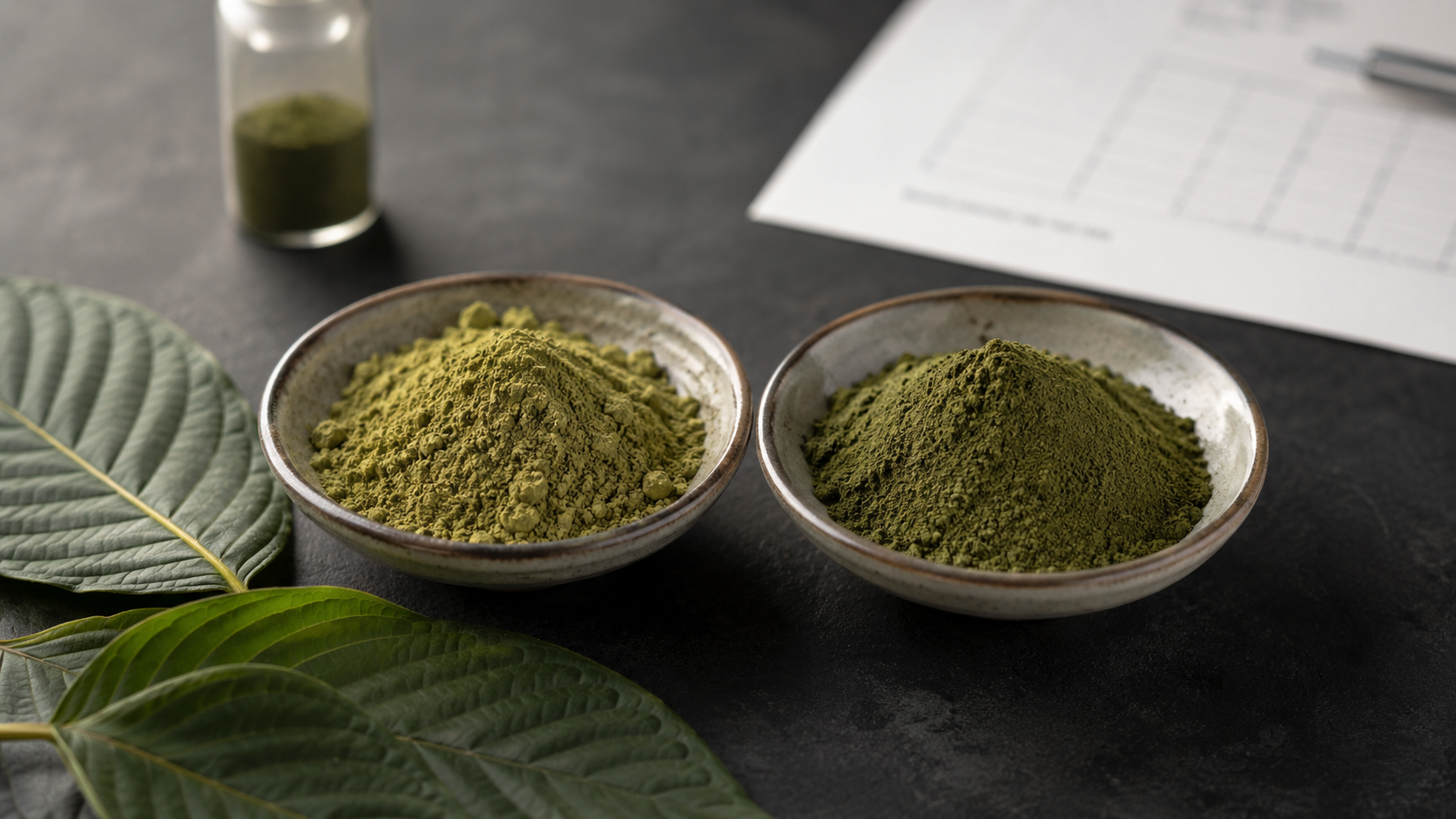
Why Kratom Batch Quality Can Matter More Than the Strain Name
Kratom shoppers are usually introduced to products through names such as Green Maeng Da, Red Borneo or White Jong Kong. Those names make products easier to organize and compare, but they can also create the impression that every batch carrying the same name will be identical.
That is not how a natural botanical product works.
Two bags labeled with the same strain name may come from different harvests, growing areas or suppliers. They may have been dried, stored, milled and handled differently. Their laboratory results may also show different alkaloid profiles.
The strain name tells you the category. The batch tells you what is actually in the bag.
Kratom Strain Names Are Not Standardized
Kratom strain names are generally trade names rather than formally regulated botanical varieties.
Names may refer to a region, vein color, processing method or profile traditionally associated with the product. However, there is no universal standard requiring every vendor’s Green Maeng Da—or even every batch from the same vendor—to be chemically identical.
That does not make strain names meaningless. They remain useful for organizing products and helping customers return to categories they recognize.
They simply should not be treated as a guarantee.
Every Kratom Harvest Is Naturally Different
Kratom comes from the leaves of Mitragyna speciosa, a tree native to Southeast Asia. Like coffee, tea and other agricultural products, its characteristics can change from one harvest to another.
Research has found that kratom alkaloid content can vary based on geographic location and season. One study of kratom leaves collected throughout the year found substantial seasonal differences in mitragynine content.
Growing conditions may also influence the finished material, including:
Soil and mineral content
Rainfall and humidity
Sun exposure
Tree maturity
Leaf maturity
Harvest timing
Geographic location
A familiar name printed on the package cannot account for all those variables. Batch-specific evaluation and testing can.
Processing and Handling Affect the Finished Powder
Harvesting is only the beginning.
After the leaves are collected, they must be dried, handled, milled and stored before reaching the customer. Each of those steps can affect the quality and consistency of the finished powder.
Improper drying or damp storage can create conditions for microbial growth. Poor handling can introduce contamination. Excessive exposure to heat, air, light or moisture may also affect the condition of the plant material over time.
The grind matters as well. A consistently fine powder is easier to measure and mix than material containing uneven particles, stems or other coarse plant matter.
A creative strain name cannot compensate for careless processing.
Freshness Is Part of Batch Quality
Kratom powder does not suddenly become unusable on a specific date, but storage conditions matter.
A fresh batch that has been properly sealed and protected from moisture, heat and direct sunlight will generally retain its color, aroma and consistency better than powder that has spent months sitting in poor conditions.
Customers usually cannot determine the complete history of a product by looking at the front label. That makes the vendor’s sourcing, inventory practices and packaging important.
Properly rotating inventory and protecting the powder throughout storage are less exciting than inventing another dramatic strain name—but they matter considerably more.
Laboratory Results Provide Information a Name Cannot
A strain name cannot tell you whether a batch has been screened for contaminants. It also cannot show the batch’s measured alkaloid profile.
Independent laboratory testing can evaluate several important areas:
Mitragynine and other measured alkaloids
7-hydroxymitragynine levels
Heavy metals such as lead, arsenic, cadmium and mercury
Microbial contaminants such as Salmonella and E. coli
Yeast and mold
Testing does not make every botanical batch identical, nor does it predict exactly how an individual will respond to a product. It does provide objective information about the material that a strain name alone cannot offer.
That distinction matters. The FDA has previously identified concerning heavy-metal levels in some tested kratom products, while researchers and public-health agencies have also documented microbial contamination in portions of the commercial market.
Quality should be supported by evidence—not assumed from the label.
Consistency Does Not Mean Every Batch Is Chemically Identical
No responsible vendor can make a natural agricultural product behave like a precisely manufactured chemical compound.
For kratom, consistency should mean that the vendor applies the same standards to every batch:
Working with dependable suppliers
Inspecting the incoming material
Maintaining careful handling and storage practices
Using independent laboratory testing
Rejecting material that does not meet established standards
Providing honest product information without exaggerated promises
The exact numbers may change somewhat from one harvest to another. The quality-control process should not.
Where the Strain Name Still Helps
Strain names still have a practical purpose.
They help organize a large product selection into familiar categories. They can also help customers identify products they have previously purchased or compare options within the same vendor’s catalog.
The mistake is assuming that the name alone proves quality, strength or consistency.
A product called “Super,” “Elite,” “Reserve” or “Premium” is not automatically better because the label sounds impressive. Those words are marketing unless the material behind them supports the claim.
The next time two products carry similar names, look past the front of the bag. The quality of the leaf, the handling of the batch and the laboratory information behind it are more meaningful than how dramatic the name sounds.
How Koala T Herbals Approaches Batch Quality
At Koala T Herbals, we focus on traditional botanical kratom powder—not isolated, enhanced or high-7-OH products.
We work with established suppliers, pay attention to freshness and use independent laboratory testing to evaluate the products we sell. Our goal is not to pretend that nature produces identical material every time. It is to apply a consistent quality process to every batch we offer.
Strain names help customers navigate the store. They do not replace sourcing, testing or honest information.
Quality leaf first. Always.
Sources
Seasonal and Geographic Variation in Alkaloid Content of Kratom
Evaluation of Mitragynine, Metals and Microbes in Commercial Kratom Products
This article is provided for general informational purposes and should not be considered medical or legal advice.