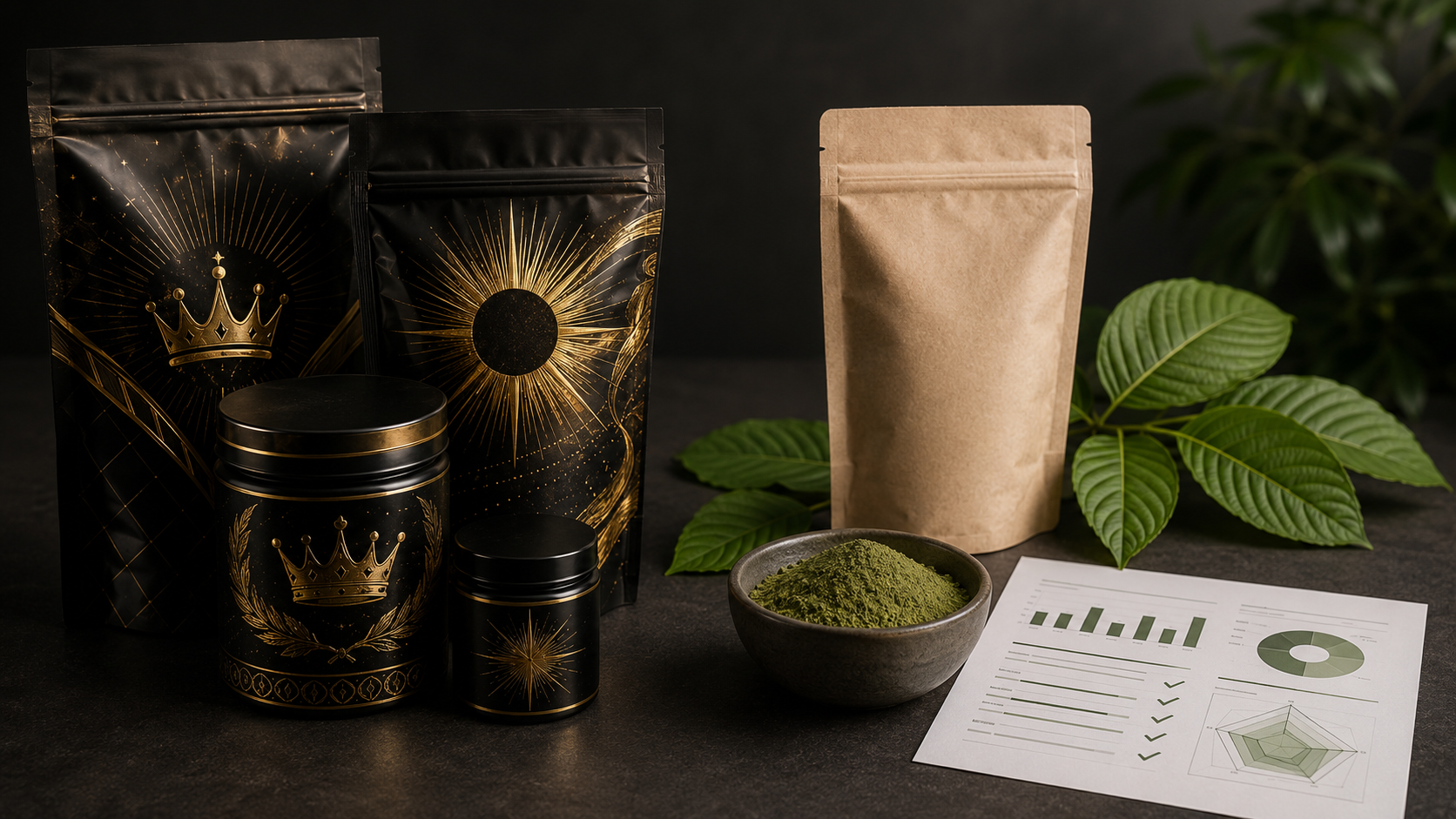
How to Compare Kratom Products Without Falling for Marketing Names
Kratom product names can get ridiculous.
Super. Ultra. Reserve. Gold. Elite. Premium. Diamond. Trainwreck.
Some names describe familiar categories. Others are simply designed to make one product sound stronger, rarer or more impressive than another.
The problem is that these terms are not standardized. A product labeled “Super Premium” is not automatically better than one with a plain name. In many cases, the name tells you more about the marketing than it does about the material inside the bag.
That does not mean every product name is meaningless. Traditional strain and regional names can help organize a store and make familiar products easier to find. They just should not be the only thing you use to compare products.
Here is what deserves more attention.
Start With the Actual Product Type
Before comparing names, determine what the products actually are.
Traditional kratom powder, enhanced powder, extract and concentrated 7-OH products are not interchangeable—even when sellers place them all under the kratom label.
A product listing should clearly explain its form and ingredients. If the product contains extract, added alkaloids or anything beyond traditional botanical leaf, that should be stated plainly.
Be cautious when the listing uses phrases such as “maximum strength” or “advanced formula” without explaining what makes the product different. Strong language is not a substitute for useful information.
At Koala T Herbals, we sell traditional botanical kratom powder—not isolated, enhanced or high-7-OH products.
Look Past Words Like “Premium” and “Elite”
Terms such as “premium,” “reserve” and “elite” do not have a universal definition in the kratom market.
One vendor may use “premium” to describe a finer grind or a carefully selected batch. Another may add the word to nearly every product because it sounds better on the label.
Neither the name nor the price proves quality.
If a seller claims that a product is special, look for an actual explanation. Was it sourced differently? Does it have a distinct laboratory profile? Is it processed or blended differently? Is it an extract rather than ordinary leaf?
If the seller provides no meaningful answer, the name is probably doing most of the work.
Check the Ingredient Information
A customer should be able to identify what is in the product without guessing.
For traditional kratom powder, the ingredient list should be simple. If the product contains extracts, flavoring, sweeteners, fillers or added alkaloids, those ingredients should be disclosed.
This becomes especially important with tablets, gummies, shots and other processed products. A dramatic name on the front means very little if the back does not clearly explain what the product contains.
Avoid products that rely on vague phrases such as “proprietary blend” to conceal the amount or identity of important active ingredients.
Clear labeling is not exciting, but it is far more useful than a flashy product name.
Find the Laboratory Results
Independent laboratory testing provides information that branding cannot.
A useful laboratory report—often called a Certificate of Analysis or COA—may include testing for:
Mitragynine and other measured alkaloids
7-hydroxymitragynine
Lead, arsenic, cadmium and mercury
Salmonella and E. coli
Yeast and mold
These tests answer different questions. Alkaloid testing describes measured parts of the batch’s chemical profile. Heavy-metal and microbial testing screen for certain contaminants.
That matters because contamination has been found in portions of the commercial kratom market. The FDA reported concerning lead and nickel levels in some of the products it tested and has also warned about products contaminated with Salmonella.
A product name cannot reveal any of that.
Testing does not guarantee that every customer will have the same experience, and it does not make every natural batch identical. It does provide objective information that marketing language cannot.
Make Sure the Results Match the Product
Seeing a laboratory report is a good start. The next question is whether it actually belongs to the product being sold.
Look for identifying information such as:
Product or sample name
Batch or lot number
Testing date
Laboratory name
Types of tests performed
Final results
Units of measurement
A generic report with no connection to a particular product or batch is less useful than a report that can be matched to what is being sold.
The testing date matters as well. A report from years ago may show that one previous sample was tested, but it does not necessarily describe the current inventory.
Do not assume that a laboratory logo on a product page means every available batch has been thoroughly tested. Read the report itself.
Consider the Individual Batch
Kratom is an agricultural product. Natural differences occur between harvests and batches.
Growing location, season, leaf maturity, drying, milling, handling and storage may all influence the finished powder. Two products with the same strain name will not necessarily have identical laboratory profiles, color, aroma or consistency.
That is why batch quality can matter more than the strain name.
The name helps identify the category. The condition and testing of the current batch tell you more about the actual product.
Pay Attention to Vendor Transparency
A trustworthy product listing should answer basic questions without forcing the customer to decode it.
Look for vendors that clearly provide:
Product form
Ingredient information
Package size
Laboratory information
Storage guidance
Shipping and return policies
Business contact information
Age restrictions
Appropriate warnings
You should also be able to tell who is selling the product. Anonymous websites, copied descriptions and missing contact information do not automatically prove that a product is poor quality, but they provide little reason for confidence.
Transparency is not about making a website look scientific. It is about giving customers enough real information to make a comparison.
Be Skeptical of Medical and Guaranteed-Effect Claims
Product descriptions should not promise to diagnose, treat, cure or prevent a medical condition.
Be careful with listings that guarantee a specific result or present subjective product descriptions as established facts. Individual responses can vary, and a natural botanical product cannot honestly guarantee the same experience for every customer.
Labels such as “fast,” “moderate” and “slow” are informal industry classifications. They can help customers organize products, but they should not be treated as medical claims or guaranteed effects.
The more certain and dramatic the promise sounds, the more carefully you should examine the information supporting it.
Compare Price Only After Comparing the Product
The lowest price is not always the best value. The highest price is not proof of better quality either.
Before comparing prices, make sure you are comparing similar products:
Is each one traditional powder, extract or enhanced material?
Are the package sizes equal?
Is independent laboratory information available?
Are the ingredients clearly disclosed?
Does the seller provide meaningful product and batch information?
Are shipping costs included in the comparison?
A plain product with clear testing and labeling may be a better purchase than an expensive product wrapped in dramatic branding.
Use a Simple Comparison Checklist
When comparing two kratom products, ask:
What type of product is it?
What ingredients does it contain?
Is it traditional leaf, enhanced material or an extract?
Are independent laboratory results available?
Can the results be connected to the product or batch?
Does the seller clearly explain the product?
Are the claims realistic?
Am I paying for better information and quality—or just a better-sounding name?
If those questions are difficult to answer, the product name should not be enough to earn your trust.
Names Help You Browse. Information Helps You Compare.
There is nothing wrong with using familiar strain names to navigate a kratom store. They make large product selections easier to understand and help returning customers locate products they recognize.
The problem begins when a dramatic name is treated as proof of quality, strength or consistency.
Look beyond the front label. Check the product type, ingredients, batch information, laboratory results and the seller’s transparency.
The best comparison is based on what the vendor can show you—not how loudly the product is named.
Sources
FDA: Laboratory Analysis of Kratom Products for Heavy Metals
Evaluation of Mitragynine, Metals and Microbes in Commercial Kratom Products
This article is provided for general informational purposes and should not be considered medical or legal advice.