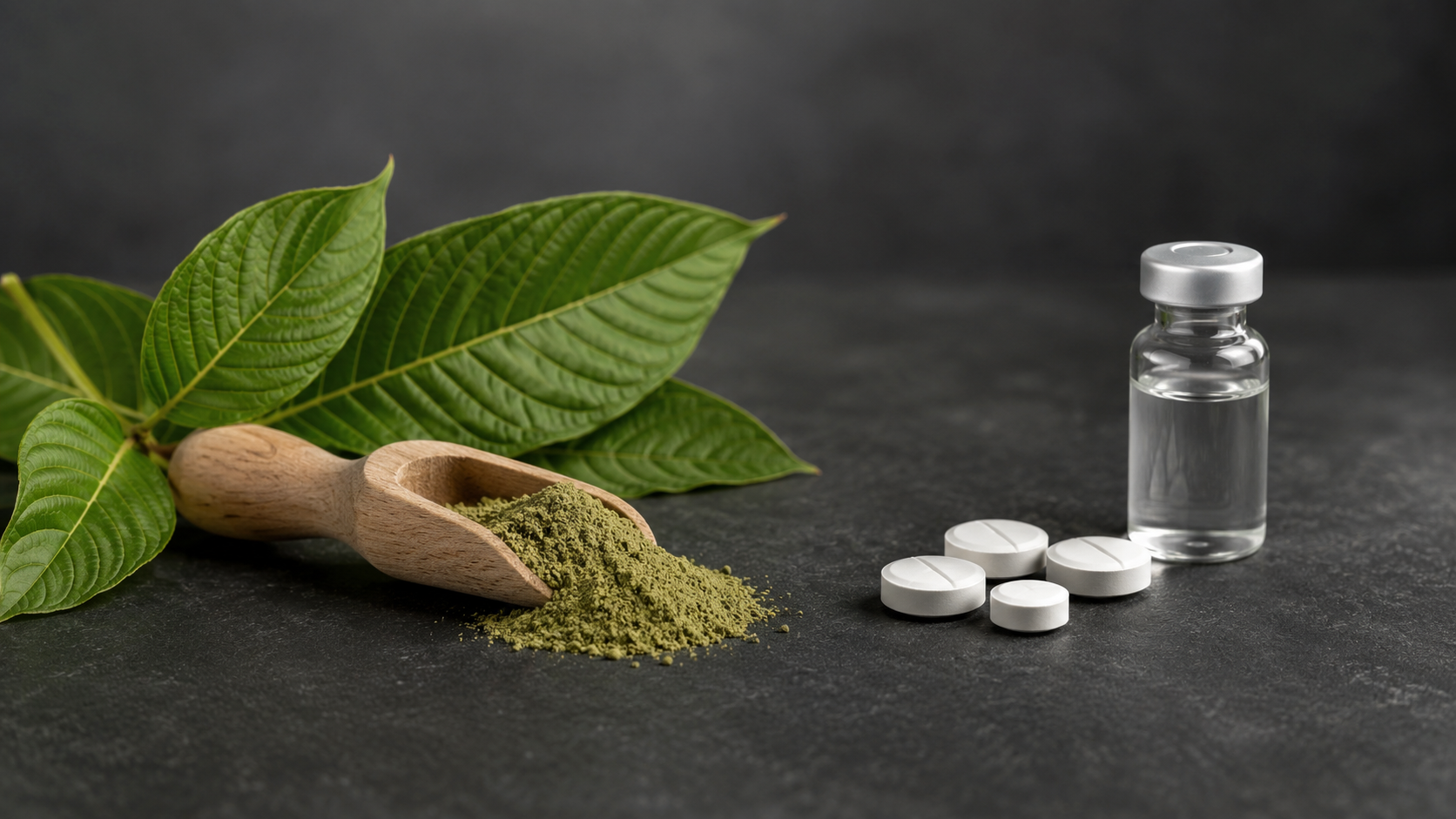
DEA Moves to Temporarily Schedule High-7-OH Products: What It Means for Traditional Kratom
Updated July 25, 2026
The Drug Enforcement Administration has announced its intent to temporarily place certain products containing elevated levels of 7-hydroxymitragynine—better known as 7-OH—into Schedule I of the Controlled Substances Act.
That announcement has created some confusion about whether kratom itself is being scheduled. It is not.
The proposed action specifically targets products containing 7-OH above a defined threshold. Traditional botanical kratom containing naturally occurring trace levels below that threshold is not included.
What has the DEA announced?
On July 6, 2026, the DEA published a notice of intent to temporarily schedule 7-OH above a specified concentration. The agency cited the rapid growth of concentrated and semi-synthetic 7-OH products sold as tablets, gummies, powders, extracts and dissolvable strips.
The DEA has not issued the final temporary scheduling order yet.
According to the notice, the order cannot be issued before August 5, 2026. If issued, it will take effect when it is published in the Federal Register.
The temporary placement would remain in effect for two years, with the possibility of a one-year extension while the government considers permanent scheduling.
What products would be affected?
The proposed threshold covers botanical kratom material containing more than 0.050% 7-OH by dry weight.
It also covers extracts, concentrates, processed edibles, pressed pills and synthetically produced products containing:
More than 0.050% 7-OH by weight or volume; or
More than 1 milligram of 7-OH in the finished article.
The proposal also addresses several related substances, including mitragynine pseudoindoxyl, MGM-15 and MGM-16.
In plain English, the DEA is targeting concentrated, chemically altered and high-7-OH products—not ordinary kratom powder containing the small amount of 7-OH naturally present in the leaf.
Is traditional kratom being scheduled?
No—not under this proposed action.
The DEA explicitly states that the temporary scheduling action does not apply to botanical kratom products containing naturally occurring 7-OH below the specified threshold.
Kratom leaf naturally contains numerous alkaloids. Mitragynine is generally the most abundant, while 7-OH typically occurs only in trace amounts. Some newer products, however, contain concentrations far beyond what is normally found in unprocessed leaf.
That difference matters.
A highly concentrated 7-OH tablet is not the same product as traditionally processed kratom powder, even when both are marketed using the kratom name.
Why is the DEA taking action?
The DEA says concentrated 7-OH products have become increasingly available through online sellers, smoke shops, convenience stores and gas stations.
According to the agency, these products may have inconsistent concentrations, uncertain ingredients and opioid-like effects. The DEA also cited poison-control reports, dependence concerns and cases involving 7-OH alongside other substances.
Whether every detail of the DEA’s reasoning will go unchallenged remains to be seen. The Department of Health and Human Services has opened a public docket specifically requesting information about the proposed threshold.
That comment period remains open through July 31, 2026.
What could this mean for the kratom industry?
In our view, separating high-7-OH products from traditional botanical kratom is important.
Concentrated 7-OH products have increasingly been marketed under the broad kratom label, despite being substantially different from natural leaf powder. This has created confusion for customers, regulators and businesses that sell traditional kratom.
If the temporary order takes effect as written, products exceeding the federal threshold would become subject to Schedule I controls. That would affect their manufacture, sale, distribution, importation, exportation and possession.
Products below the federal threshold could still be affected by state or local laws. The DEA’s action would not override states that already impose stricter limits or prohibit certain kratom-related products.
Where Koala T Herbals stands
Koala T Herbals does not sell isolated, enhanced or high-7-OH products.
Our product line is based on traditional botanical kratom powder. We believe customers should be able to distinguish natural leaf products from concentrated products created to deliver unusually high amounts of a single alkaloid.
We also believe clear labeling, independent laboratory testing and honest product information are essential. Customers should be able to see what they are buying without sorting through exaggerated claims or misleading product names.
The proposed scheduling action is not a ban on all kratom. It is a targeted action against products containing 7-OH above specific federal limits.
That distinction should remain clear as this process moves forward.
Sources
This article is provided for general informational purposes and should not be considered legal advice.