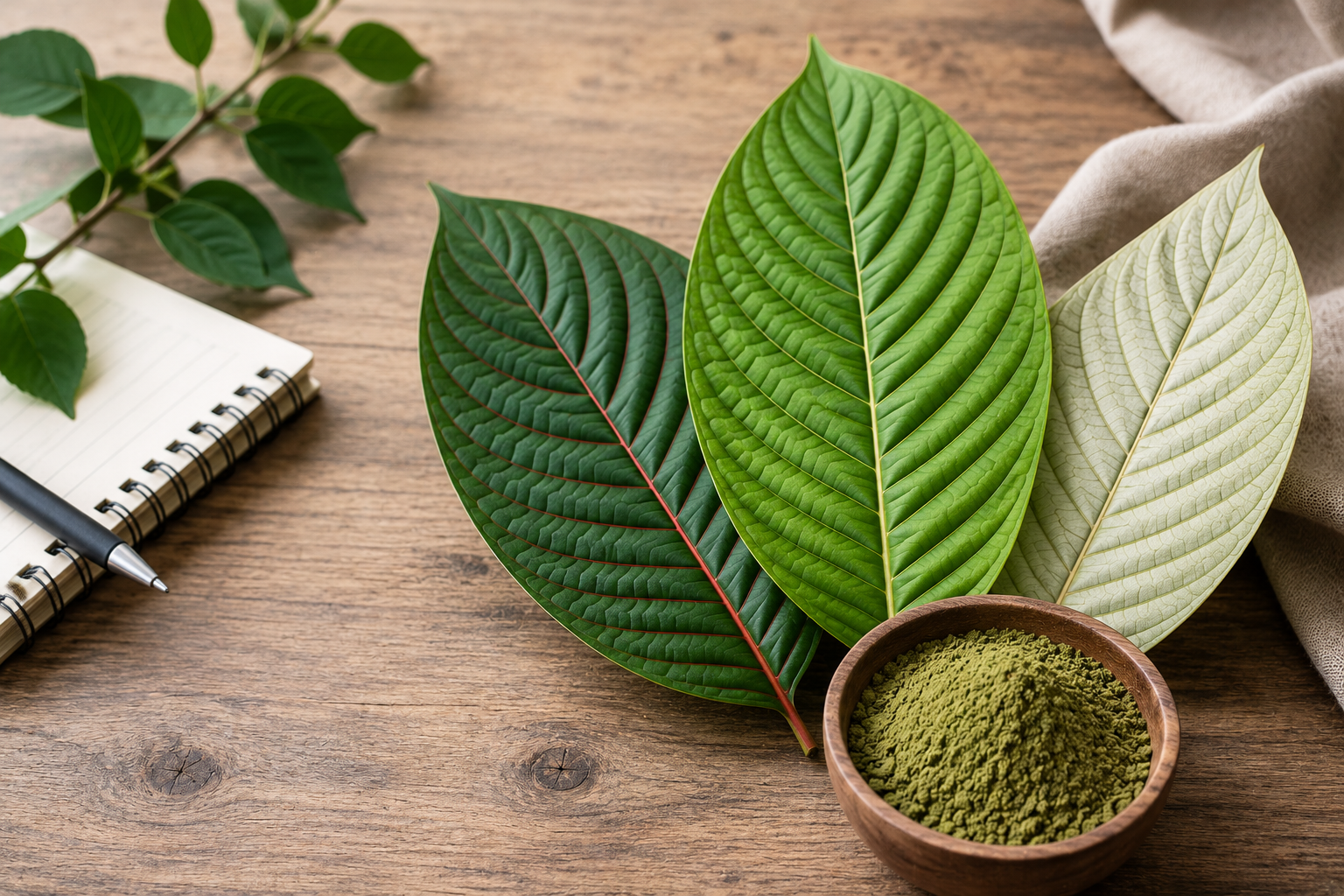
Walk into almost any kratom shop and you'll see dozens of names:
Green Maeng Da. Red Dragon. White Elephant. Gold Bali. Super Green. Premium Reserve.
At first glance, it can feel like there are endless strains, each with completely different origins and effects.
The truth is a little simpler.
Most products generally fall into three primary categories:
Red
Green
White
Everything else is often a variation, blend, processing method, vendor naming convention, or marketing built around those core categories.
That doesn't mean products are all the same. Freshness matters. Processing matters. Batch quality matters. But the market itself is often simpler than it first appears.
The Three Primary Categories
Red
Red varieties are generally associated with red vein leaves and certain drying or post-harvest methods.
Common examples include:
Red Maeng Da
Red Bali
Red Dragon
Red Horn
Red Elephant
While names vary, many still fall within the red category.
Red varieties are often associated with smoother, slower-paced experiences and are commonly chosen by customers looking to unwind or relax later in the day. Red products are among the most recognized categories in the market and are frequently described as approachable and well-suited for evening routines. Popular examples include Red Bali, Red Maeng Da, and Red Horn.
Green
Green varieties are among the most common products available today.
Examples include:
Green Maeng Da
Green Malay
Green Dragon
Green Elephant
Green Borneo
Greens often become the foundation for blends because they sit in the middle of the primary categories.
Green varieties are often considered the middle ground between Red and White categories and are commonly described as balanced and versatile. Many customers choose Green products for general daytime use because they tend to sit between the slower characteristics often associated with Reds and the more uplifting qualities commonly linked to Whites. Popular examples include Green Maeng Da, Green Malay, and Green Elephant.
White
White varieties make up the third primary category.
Examples include:
White Maeng Da
White Borneo
White Elephant
White Dragon
Again, names may change from vendor to vendor even when the underlying category remains similar.
White varieties are often associated with more uplifting, daytime-oriented experiences and are commonly selected for active routines or morning use. Customers frequently describe White products as a popular choice when looking for a brighter or more productive experience. Popular examples include White Maeng Da, White Borneo, and White Elephant.
Yellow
Yellow is generally not considered a separate strain.
It's usually discussed as a processing result, blend, or post-harvest variation depending on the vendor.
The common explanation is:
• Different drying methods
• Sun exposure / indoor drying differences
• Oxidation
• Fermentation variations
• Sometimes blending
Unlike Red / Green / White, Yellow isn't usually treated as a primary category.
Yellow varieties are generally not considered a separate primary category like Red, Green, or White. Instead, Yellow products are often associated with specific drying methods, post-harvest processing, blending, or vendor interpretation. This means Yellow products may vary significantly between vendors and are not typically viewed as a completely separate strain.
Popular examples include:
Yellow Vietnam
Yellow Maeng Da
Yellow Borneo
What Is Maeng Da?
This is one of the most misunderstood names in the market.
Many customers assume Maeng Da is its own plant, species, or completely separate strain.
It isn't.
The term Maeng Da comes from Thai and is commonly translated as "Pimp" or "Pimp Grade."
Historically, the term suggested something enhanced, improved, stronger, or premium.
Over time, the name carried into the modern market and became one of the most recognizable labels in the industry.
Today you'll commonly see:
Red Maeng Da
Green Maeng Da
White Maeng Da
This immediately raises a question:
If Maeng Da is its own strain, why does it appear under all three primary categories?
The answer is that Maeng Da is generally treated as a product designation rather than a separate botanical strain.
In many cases, Maeng Da products are believed to be blends, often leaning heavily on Green and White varieties, though formulas vary between vendors.
Some vendors may use:
Green + White blends
Green dominant blends
White enhanced blends
Others may simply use the term as a premium designation.
There is no universal industry formula.
This is one reason two vendors can both sell Green Maeng Da while offering noticeably different experiences.
The name may match.
The product may not.
So What About Dragon, Elephant, Horn, Gold, And Everything Else?
This is where the market gets interesting.
Many names customers see today do not necessarily represent completely separate strains.
Instead, names often come from:
Vendor Naming
Some names are simply branding.
Dragon
Elephant
Reserve
Premium
Different vendors may use these names differently.
There is no universal standard.
Blends
Some products combine categories.
Examples:
Green + White
Red + Green
Red + White
Many products marketed under unique names may ultimately be blends built around the three primary categories.
Processing Methods
This is where colors like Gold and Yellow often appear.
These are frequently associated with drying methods, oxidation, fermentation, or post-harvest processing rather than entirely separate strains.
Examples:
Gold Bali
Yellow Vietnam
The final color may come from processing differences instead of representing a new plant variety.
Bentuangie
Bentuangie is another example often discussed in the market.
Unlike standard Red, Green, or White products, Bentuangie is commonly associated with a fermentation process after harvest.
This additional processing can alter color, aroma, and the final product characteristics.
Again, this supports the idea that not every name represents a completely separate strain. Sometimes processing itself creates differentiation.
Does This Mean Everything Is The Same?
No.
This is where people often misunderstand the conversation.
Even when two products share the same category, they can still differ significantly because of:
Freshness
Harvest conditions
Drying methods
Milling quality
Storage
Blending ratios
Batch variation
A fresh, finely milled Green product from one vendor may feel very different from another vendor's version.
The category may be the same.
The experience may not.
Why This Matters
Customers shouldn't need twenty names memorized just to shop confidently.
Understanding the three primary categories helps simplify the process:
Red. Green. White.
From there, explore blends, processing methods, and personal preference.
At Koala T Herbals, we believe a quality product is only part of the experience.
We've got that covered.
We focus on the rest.
Freshness. Transparency. Service.